
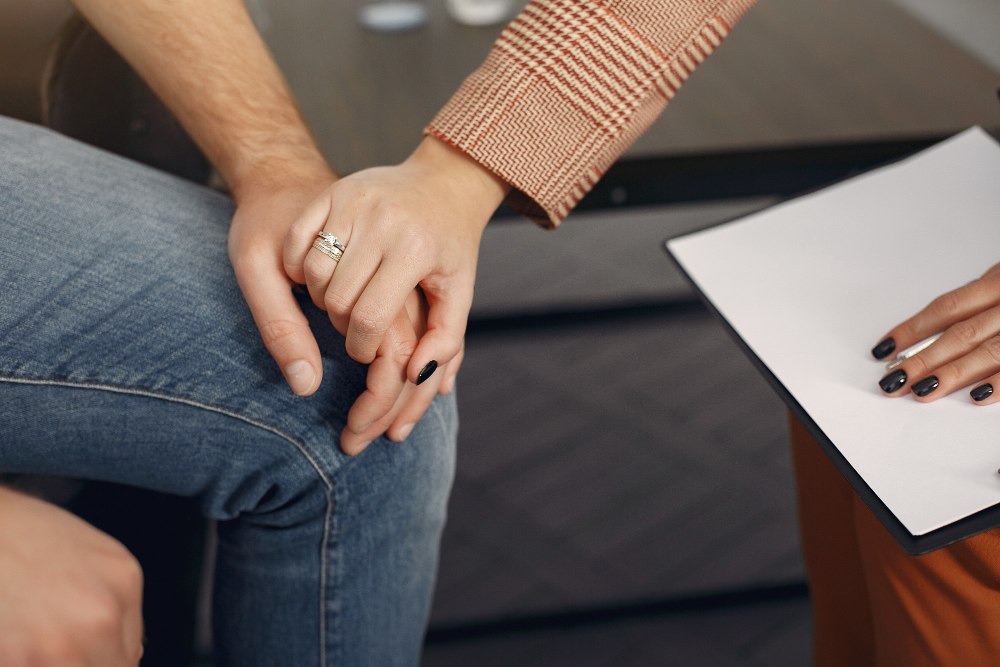
You made it past 90 days. Maybe you were starting to breathe again.
Maybe your partner was starting to trust again.
And then the relapse happened.
Not loud. Not dramatic. Just enough to make both of you think, “What does this mean now?”
At Society Wellness Behavioral Health, we’ve walked with couples through this exact moment. The quiet car ride home. The avoided eye contact. The guilt that sits heavy in the room. If you’re trying to figure out how to move forward together, our couples counseling in Massachusetts offers a space built specifically for LGBTQ+ partners navigating recovery and repair.
Before you decide this broke everything, let’s talk about why relapse can hit LGBTQ+ relationships differently — and why that difference doesn’t mean you’re doomed.
When Sobriety Becomes Part of the Relationship’s Foundation
In many heterosexual relationships, sobriety is deeply personal. In LGBTQ+ relationships, it often becomes communal.
Your relationship may have formed during:
- A season of coming out
- A season of family estrangement
- A move to find safer community
- A shared recovery journey
For many queer couples, partnership isn’t just romantic. It’s survival. It’s safety. It’s chosen family.
So when relapse happens, it can feel like more than a setback. It can feel like a threat to the one stable place you both built.
One partner may think:
“I thought we were safe now.”
The other may think:
“I ruined the one good thing in my life.”
Relapse doesn’t just disrupt sobriety. It can shake the emotional contract you both believed you had.
Minority Stress Doesn’t Disappear When You Get Sober
There’s a layer here that often goes unnamed: minority stress.
LGBTQ+ couples carry ongoing external pressure that others may not see:
- Navigating public safety in certain spaces
- Handling extended family tension
- Facing discrimination in workplaces
- Managing political or cultural hostility
Even in affirming communities, there can be subtle stress. Microaggressions. Internalized shame. Social comparison.
Sobriety removes substances — but it doesn’t automatically remove stress.
When stress builds without being processed, relapse can become an attempt to regulate what feels overwhelming. Not because recovery didn’t matter. Not because love didn’t matter.
Because the nervous system was overloaded.
Understanding that context doesn’t excuse behavior. But it does explain why relapse in LGBTQ+ relationships often feels layered and complicated.
Shame Multiplies — Fast
Relapse after 90 days carries its own sting. But for LGBTQ+ alumni, shame often has history behind it.
Many queer adults have already survived:
- Being told they were “too much”
- Feeling like the family disappointment
- Hiding parts of themselves to stay safe
Relapse can reactivate that old narrative:
- “I’m broken.”
- “I’ll never get this right.”
- “Maybe everyone who doubted me was right.”
Shame is loud. And shame pushes people to withdraw — which is the opposite of what relationships need during repair.
If you relapsed, you might be shrinking right now.
If you’re the partner, you might feel anger mixed with protectiveness.
Both responses make sense.
The Partner Who Stayed Sober Is Often Quietly Unraveling
In couples work, we often see something subtle: the partner who didn’t relapse starts to over-function.
They monitor.
They manage.
They suppress their anger to avoid “making it worse.”
But underneath, they may be thinking:
- “Can I trust this again?”
- “Do I have to carry both of us?”
- “Am I naïve for staying?”
In LGBTQ+ partnerships — especially when external family support is limited — partners can become each other’s entire emotional ecosystem.
When relapse happens, it can feel like that ecosystem destabilized overnight.
The pain of the non-relapsing partner deserves space too. Not blame. Not silence. Space.
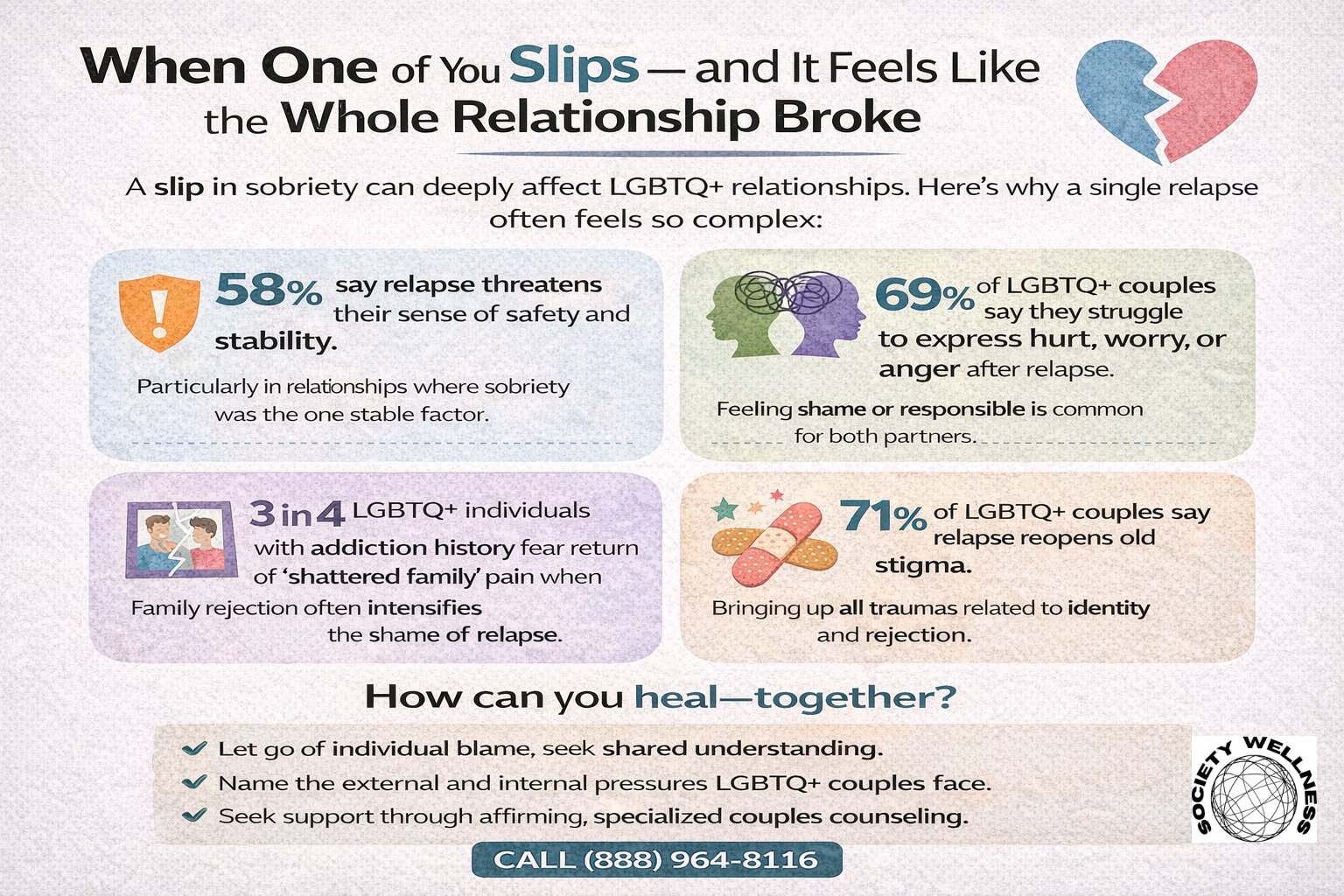
Why LGBTQ+ Couples Often Need Specialized Support
Not all therapy environments feel safe for queer couples. And when relapse is involved, safety matters even more.
You shouldn’t have to:
- Educate your therapist about your identity
- Defend your relationship structure
- Minimize discrimination you’ve experienced
That extra labor is exhausting — especially when you’re already navigating recovery.
This is where Lgbtq+ couples counseling becomes different. It centers your lived experience rather than treating it as a side note.
Instead of asking, “Why did you relapse?” in isolation, we explore:
- What pressures were building?
- What conversations didn’t feel safe to have?
- What support systems need strengthening?
- How can both partners feel secure again?
Repair requires structure. Not just promises.
Rebuilding Trust Is a Process — Not a Speech
After relapse, couples often have the same argument on repeat:
- “I said I’m sorry.”
- “I don’t feel safe yet.”
- “What else do you want me to say?”
Words matter. But behavior patterns matter more.
In counseling, we focus on:
- Clear agreements around recovery support
- Identifying triggers unique to your relationship dynamic
- Building transparency practices that don’t become surveillance
- Strengthening communication during stress — not just during crisis
Trust isn’t rebuilt in one grand gesture. It’s rebuilt in consistent, small follow-through.
Think of it like stitching fabric that tore under pressure. The thread has to be strong. The stitching has to be intentional. And both people have to stay present.
You Are Not Starting From Scratch
Relapse can create the illusion of total reset.
But you are not back at day one.
You:
- Learned what 90 days feels like
- Built routines that worked
- Identified coping tools that helped
- Experienced connection without substances
That information doesn’t disappear. It becomes data.
Many alumni tell us that their second stretch of sobriety feels more honest — because it’s grounded in what they now understand about stress, shame, and relationship dynamics.
Relapse can be a teacher. A painful one, yes. But still a teacher.
What Healing Together Can Look Like
When couples commit to repair after relapse, we often see shifts like:
- More honest conversations about stress before it escalates
- Clearer boundaries around social environments that feel triggering
- Shared language for emotional overwhelm
- A deeper sense of “we’re in this together”
Recovery becomes less about proving worth and more about protecting connection.
And connection — especially in LGBTQ+ partnerships — is powerful.
Frequently Asked Questions
Is relapse a sign that our relationship is unhealthy?
Not automatically.
Relapse is usually a sign that something internal or environmental wasn’t fully addressed. It can expose relationship stress — but it doesn’t automatically mean the relationship caused it.
What matters most is how both partners respond afterward.
Should we focus on individual recovery first before working on the relationship?
Both often need attention at the same time.
Individual support strengthens personal accountability. Couples work strengthens shared safety. When done thoughtfully, they complement each other rather than compete.
I’m the partner who didn’t relapse. Is it wrong that I feel angry?
No. Anger can be a protective response. It often signals fear, hurt, or a need for reassurance.
The goal isn’t to eliminate anger — it’s to express it in ways that build clarity rather than distance.
How long does it take to rebuild trust?
There isn’t a universal timeline.
Trust rebuilds through repeated, consistent action over time. Small follow-through often matters more than big declarations.
Progress usually looks gradual, not dramatic.
What if we’ve both struggled with substances at different times?
That’s more common than people admit.
When both partners have recovery histories, relapse can activate shared fears. Structured support helps prevent co-triggering and strengthens accountability for both people.
Can couples counseling actually prevent future relapse?
No support can guarantee prevention.
But strengthening communication, reducing secrecy, and building shared coping strategies significantly lowers the likelihood of relapse repeating in the same pattern.
What if I’m ashamed to even reach out again?
That feeling makes sense.
Many alumni worry they’ll be judged or seen as a failure. But relapse is not disqualifying. It’s information. And seeking help after relapse is a sign of courage, not weakness.
A Final Word — Before You Decide It’s Over
If you’re reading this in the quiet aftermath of relapse, pause before you make permanent decisions based on temporary pain.
You are not the only LGBTQ+ couple who has faced this.
You are not uniquely broken.
You are not beyond repair.
Recovery and love both require humility. Both require honesty. Both require support.
Call (888) 964-8116 or visit our Lgbtq+ couples counseling services in Massachusetts to learn more about our Lgbtq+ couples counseling services in Massachusetts.