

Sometimes the hardest place to be in recovery is the middle.
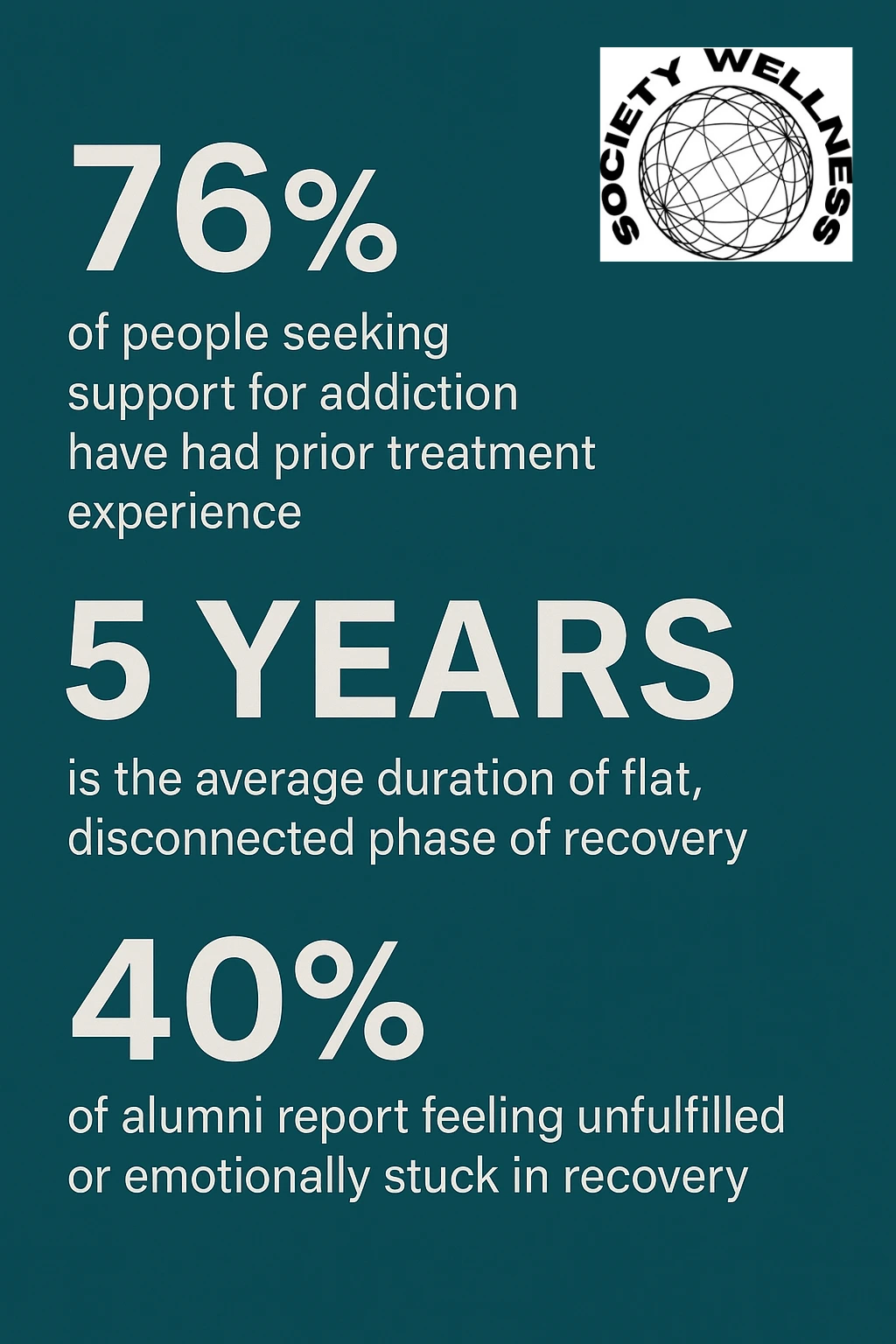
Not day one. Not rock bottom. Not the celebratory milestones. But somewhere in between—sober, stable, and… disconnected.
If you’ve been in recovery for a while and you’re quietly wondering, “Is this it?”—you’re not alone. At Society Wellness Behavioral Health, our partial hospitalization treatment (PHP) offers long-term alumni a space to realign emotionally, without starting from scratch.
Because flatness isn’t failure. And coming back doesn’t mean going backward.
The Quiet Weight of Long-Term Recovery
When you first got sober, everything was loud. The emotions. The healing. The urgency.
But time changes things. And for many alumni, the emotional high of early recovery fades into something quieter—and harder to name. A sense of going through the motions. Spiritual distance. A gap between the life you’re living and the one you thought sobriety would feel like.
This isn’t uncommon. It’s not something to fix with a gratitude list or a quick check-in. It’s something to take seriously.
And PHP is built for that kind of seriousness.
What Is Partial Hospitalization Treatment—and Why Does It Help?
Partial hospitalization treatment is a structured, daytime level of care that offers intensive support without requiring an overnight stay. At Society Wellness, it’s designed to serve both those just beginning their recovery and those, like you, who may need space to reset and reconnect.
Think of PHP as a deep breath in the middle of your story. It offers:
- Therapeutic depth without the disruption of inpatient care
- Daily clinical and peer support, including group therapy, individual therapy, and psychiatric check-ins
- A container for real reflection, where you don’t have to pretend you’re okay
- Room to explore emotional stuckness, burnout, or spiritual fatigue—with guidance
You don’t need to justify the need for more support. You just need to listen to yourself.
Coming Back Isn’t a Step Back
One of the biggest internal barriers alumni face is shame—not about using, but about needing help again. There’s often a voice that says, “I should be past this.”
But emotional growth doesn’t have an expiration date. If anything, coming back now is a sign of maturity—not regression.
“PHP helped me reconnect with the parts of myself I’d muted just to keep going. I didn’t lose progress—I gained clarity.”
— Outpatient Client, 2024
You don’t go back to the start. You go forward from where you are, with more tools and perspective than before.
Why Emotional Flatness Deserves Attention
In recovery, we talk a lot about relapse—but not enough about emotional drift. That slow fade into disconnection, even when you’re “doing everything right.”
You might recognize it as:
- Not feeling joy in things that used to light you up
- Coasting through relationships instead of engaging
- Numbing with busyness, productivity, or control
- Feeling spiritually or creatively dull
These aren’t minor mood swings. They’re red flags. Not of failure—but of emotional needs that deserve tending.
PHP provides the environment, support, and permission to explore those needs.
You Don’t Have to “Earn” the Right to Return
Let this be clear: You don’t need to relapse to ask for help. You don’t need to hit a new bottom. If you’re sober but feeling hollow, you’re allowed to return.
At Society Wellness, we recognize that long-term recovery isn’t just about avoiding old behaviors—it’s about building a full, connected life. That takes more than maintenance. It takes intention.
Partial hospitalization treatment gives you space to remember who you are, what matters to you now, and what still needs healing.
Rediscovery in a Supportive Community
One of the hidden gifts of PHP is community—not just with people in crisis, but with others in recovery who are also looking for more than “just fine.”
In group therapy and structured daily sessions, you’ll meet people navigating different chapters of the same story. Some new. Some returning. All real.
You’ll find that your insight as an alum is valuable—not just to others, but to yourself. Sometimes saying the words you’ve forgotten you know is what helps you believe them again.
Why Now Might Be the Right Time
If you’ve been quietly pushing through, waiting for the fog to lift, or convincing yourself that this is just what long-term sobriety feels like… pause.
What if it’s not?
What if there’s more available to you—more connection, more purpose, more aliveness—but it starts by stepping back into support?
There’s no wrong time to come back. But there is relief in returning before the disconnection becomes crisis.
Ready to Reconnect? You’re Welcome Here.
Whether you’ve been out of treatment for a year, five years, or longer—this space is for you.
Partial hospitalization treatment in Needham, MA is more than a service. It’s a soft landing. A place to breathe. A space to remember that being sober doesn’t mean being done.
📞 Call (888) 964-8116 or visit our PHP program page to learn more about how we support long-term alumni ready to reconnect.
FAQ: Partial Hospitalization Treatment for Alumni
What if I haven’t relapsed—can I still come back to PHP?
Absolutely. Many alumni return to PHP not because they’ve relapsed, but because they feel emotionally disconnected, flat, or overwhelmed. PHP is designed to meet you where you are, not where people assume you should be.
Will I have to repeat things I already did in earlier treatment?
No. Your treatment plan will be personalized based on your current needs, insights, and goals. We recognize your prior experience and build from it, not around it.
How long does a typical PHP program last?
Most PHP participants attend for 2–4 weeks, though it varies depending on personal goals and clinical needs. The schedule includes structured weekday support, allowing for intensive care without residential stay.
Is PHP only for addiction recovery?
No. Our PHP supports clients experiencing a range of challenges, including mental health concerns like depression, anxiety, trauma processing, and emotional burnout—common among those in long-term recovery.
What if I’m not sure I “need” this?
That hesitation is common—and worth exploring. If you’ve been feeling emotionally stuck, spiritually flat, or disconnected from your recovery, it’s okay to ask questions. A no-pressure consultation can help clarify if PHP is right for you.