

Sometimes it hits out of nowhere.
You’re folding laundry. Walking the dog. Waiting at a red light. And you suddenly realize you haven’t felt much of anything in weeks. You’re sober. Life is… fine. But it’s also flat, disconnected. Like you’re showing up, but not really in it.
If you’ve been in recovery for a while and that sounds familiar, this isn’t a failure. You’re not doing something wrong. It might just mean it’s time to reconnect.
If you’ve ever been part of Society Wellness Behavioral Health’s alcohol addiction treatment in Needham, Massachusetts, you’re still part of that community—whether it’s been 6 months or 6 years. That doesn’t expire.
And here’s the truth: even long-term sobriety doesn’t immunize us from struggle. But the community that helped us get here? It’s still here when we need it.
Sobriety Was Just the Beginning—Not the Peak
When we first got sober, everything was new. We were flooded with firsts—first sober holidays, first apologies, first nights falling asleep without a buzz. It was messy, emotional, sometimes magical.
But then, the dust settles.
Life levels out. People start saying how “good” you look. You go back to work. You pay your bills. You make it through another year.
And maybe you’re grateful. But maybe… there’s something missing too.
You’re not using, but you’re also not really feeling. That spark—the one that helped you fight for your life—starts to flicker. You wonder: Is this all there is?
Long-Term Recovery Isn’t Always Happy
Here’s something we don’t say out loud enough: staying sober for years doesn’t mean we always feel whole.
In fact, for many of us, the longer we’re sober, the more complicated things can get. We’ve handled the crisis. We’ve made amends. But emotional connection? That gets harder when we stop tending to it.
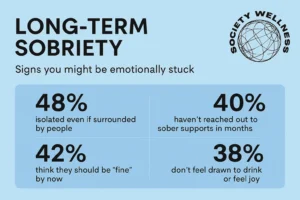
Signs you might be emotionally stuck:
- You’re isolated, even if surrounded by people
- You haven’t reached out to sober supports in months
- You feel like you should be “fine” by now, but you’re not
- You don’t feel drawn to drink, but you also don’t feel joy
- You miss the intensity—of early recovery, or even of chaos
If you’re nodding along, you’re not alone. This is more common than anyone admits.
Why Emotional Flatness Creeps In
Early sobriety is noisy. You’re learning, stumbling, trying to stay alive. But long-term sobriety? It can get quiet. And sometimes, quiet turns into numb.
Here’s why:
- You stopped checking in – The urgency faded, and with it, your habits around emotional inventory.
- You got functional, not fulfilled – It’s easy to confuse stability with happiness.
- You started doing life solo again – Slowly, the community you leaned on fades into the background.
This isn’t a crisis. It’s a signal. One that says: you need people again.
Alcohol Addiction Treatment Doesn’t End at Discharge
If you came through Society Wellness, you know this wasn’t just a detox-and-done program. It wasn’t about white-knuckling or shame-based recovery. It was about building something real—community, connection, clarity.
That doesn’t go away just because you haven’t called in a while.
You don’t need to relapse to return. You don’t have to be in crisis to reach out. You can just… be sober and tired. Sober and flat. Sober and lonely. And still be welcome.
If you’ve been missing that spark, the path back isn’t always about finding something new. Sometimes it’s about remembering where you felt most alive, most human, most seen.
Reconnection Isn’t Weakness—It’s Wisdom
We live in a culture that celebrates independence. But recovery taught us that healing happens together.
So if part of you wants to isolate, to prove you’re “fine,” to pretend you don’t miss the people who helped you rebuild your life—notice that. And gently challenge it.
Here’s what reconnection might look like:
- Calling a fellow alum just to say hi
- Sitting in on a group you haven’t visited in years
- Volunteering with new clients to remind yourself why this matters
- Talking to your old therapist or care team at Society Wellness
- Just showing up, even if you don’t say much
None of these are acts of desperation. They’re acts of devotion—to your life, your health, your spirit.
What Help Looks Like Now
Long-term sobriety needs different kinds of support.
You might not need to talk about cravings or detox anymore. But you do need to talk about:
- Grief that’s been simmering under the surface
- Career dissatisfaction or relationship disconnection
- The existential ache that asks, “What now?”
- Your fear that you’ve plateaued, or that this version of you is all there is
This isn’t beginner stuff. This is the real heart of recovery—the stuff that lives underneath the survival phase.
And it’s exactly the kind of work Society Wellness continues to support. Their alumni and continuing care options in Needham meet you right where you are: still sober, but needing more.
It’s Okay If You Forgot How to Ask
This part might be the hardest: remembering that you’re allowed to reach back out.
There’s no time limit on needing your people.
No one’s going to say, “Why now?”
No one’s going to ask, “What happened?”
The only question that matters is, “How are you, really?”
Whether it’s been a few months or a few years, this is your invitation back. Not because you’ve failed—but because you still belong.
FAQs: What Long-Term Alumni Often Wonder
Do I have to be in crisis to return to treatment or support groups?
No. You don’t need to be drinking or using to come back. Alumni often reconnect during life transitions, emotional flatness, or simply when they miss being around people who get it.
Will I be judged for feeling stuck after years of sobriety?
Absolutely not. Emotional flatness, spiritual disconnection, and even loneliness are all normal parts of long-term recovery. You’re not broken—you’re human.
What kind of support is available for alumni?
Society Wellness offers alumni check-ins, therapy sessions, peer support options, and help navigating deeper mental health needs. They understand that the work doesn’t stop after treatment ends.
What if I’ve been gone too long?
It’s never too late. Whether you graduated last year or five years ago, the invitation to reconnect still stands. No shame. No pressure. Just open arms.
Can I give back by helping newer clients?
Many alumni find purpose in mentoring, speaking, or volunteering. Reach out to see how you can be involved—it’s often one of the most fulfilling ways to reengage.
You’re Still Part of This
Maybe no one told you this yet, so let me say it now: You didn’t get sober just to survive. You got sober to live. And if life feels a little too quiet right now, that doesn’t mean you’re failing. It means you’re ready for more.
More connection. More meaning. More moments that wake you up.
Call it a second wind. Call it a spiritual reboot. Call it whatever you want.
But please—don’t call it too late.
Need a place to land?
Call (888) 964-8116 or visit Society Wellness Behavioral Health’s Alcohol Addiction Treatment in Needham, Massachusetts. Whether you’re feeling lost, flat, or just in need of familiar faces, we’re still here. And so are you.