

When Your Child Relapses—And Their Partner’s Hurting Too
You hoped it was behind them. You prayed the worst had passed. But now your 20-something is using again—and you’re watching someone they love struggle alongside them.
You’re not just worried about your child. You’re also watching their partner try to hold things together. Maybe they’re calling you in tears. Maybe they’re shutting down. Either way, your heart is breaking for both of them.
You want to help, but you don’t want to overstep. You want to hope—but part of you is bracing for another wave.
This is where LGBTQ+ couples counseling can help.
Not by pretending everything’s fine. Not by forcing ultimatums. But by giving both people in the relationship a space to speak, grieve, reconnect, and—if it’s safe—to rebuild.
Our LGBTQ+ couples counseling program in Massachusetts is designed for moments just like this: moments when love is still present, but trust, safety, and clarity feel out of reach.
Relapse Is a Relationship Earthquake—But It Doesn’t Have to End Everything
When someone relapses, it’s not just their body that’s affected. The emotional shockwave hits everyone close to them—including their partner. Old wounds reopen. Boundaries get blurred. Promises may have been made—and broken.
For LGBTQ+ couples, there are often additional layers: fear of being judged, pressure to “look strong” to outsiders, or deep-rooted trauma around being misunderstood.
LGBTQ+ couples counseling meets people where they are, in the wreckage and the rawness. It says: You’re allowed to be hurting. And you’re allowed to want to stay.
A therapist can help both partners process what’s happening without rushing to fix or finalize the relationship. Whether they stay together, take space, or shift how they relate, the goal is emotional honesty and mutual care—not perfection.
Couples Counseling Protects Both People’s Truths—Without Picking Sides
You may be watching your child’s relationship twist under pressure and thinking: “This can’t last.” Or maybe you’re wondering if their partner is enabling them. Or if your child is treating them well. Maybe both.
Here’s what’s important: couples therapy doesn’t take sides. It holds space for both experiences to be true. Your child might be struggling deeply—and still be responsible for harm. Their partner might be loyal—and still overwhelmed.
In LGBTQ+ couples counseling, a skilled therapist creates structure so that neither person has to minimize their needs or pain. This is especially important for queer and trans couples, who may already feel pressure to present a “healthy” image to the world or fear judgment from professionals.
Instead of telling either person what to do, therapy offers a space to listen, speak honestly, set boundaries, and reconnect—if both people want that.
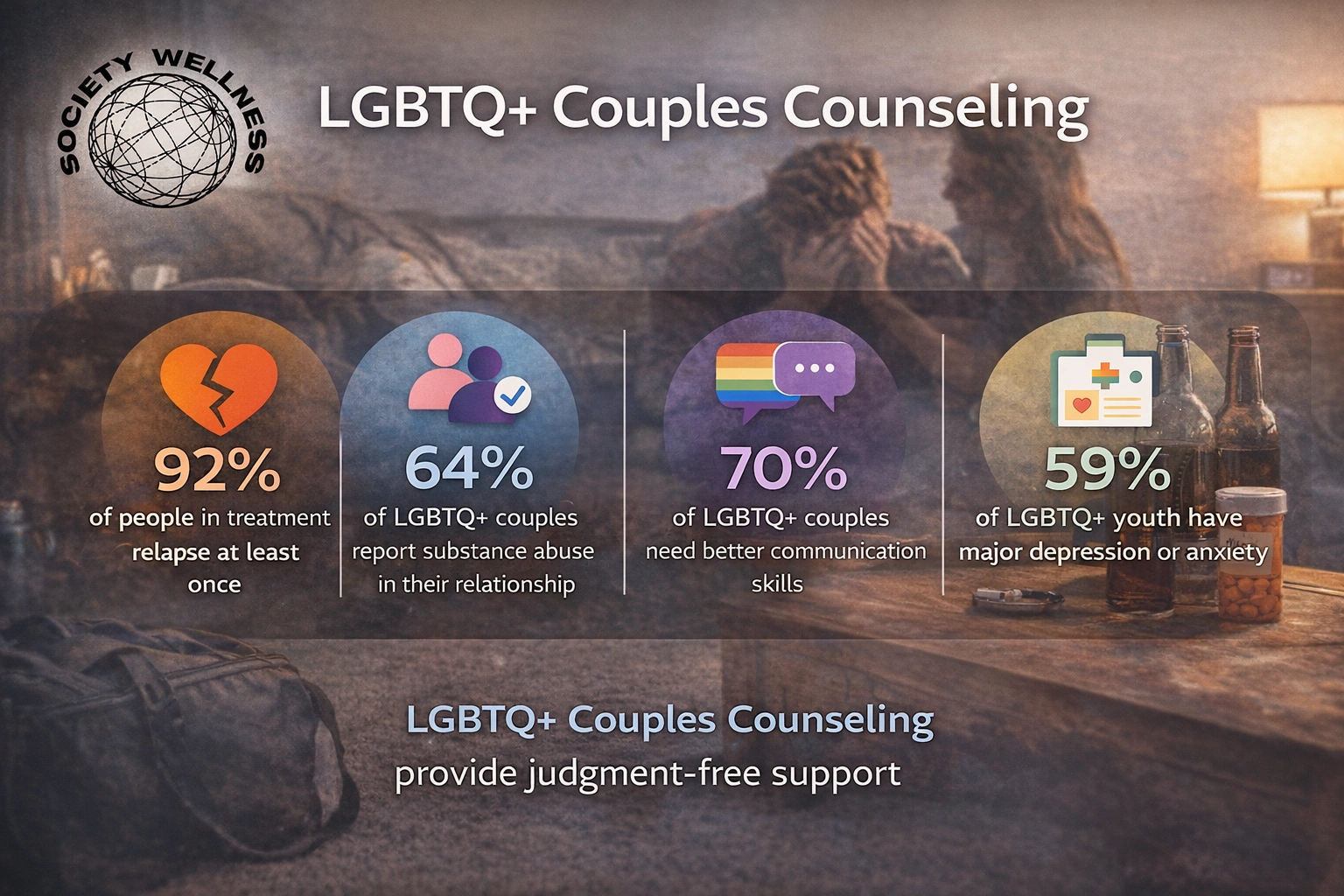
Affirming Counselors Understand LGBTQ+ Relationship Dynamics
Not all therapists are equipped to support LGBTQ+ couples—especially in the context of substance use. That’s why affirming care matters.
Affirming counselors understand how gender identity, coming out trauma, family rejection, or past abuse can shape how someone shows up in a relationship. They also recognize how these layers can get triggered during a relapse.
For example:
- A queer person raised in a rejecting household might freeze when conflict arises, fearing abandonment.
- A trans person who has faced repeated invalidation might shut down emotionally when trust is broken.
None of these patterns are “wrong.” But they do require a therapist who sees the whole picture.
In LGBTQ+ couples counseling, the work isn’t just about managing a relapse—it’s about helping both people feel fully seen and safely held, even in their messiest moments.
Parents Often Feel Left Out—But Your Presence Still Matters
You might feel like the third wheel in all this. Like your role has been reduced to damage control or silent witness. But even when your child is an adult, your love and steadiness can still be a lifeline.
Supporting their relationship doesn’t mean approving of everything. It means recognizing when two people are trying—however imperfectly—to stay connected.
It also means trusting that support doesn’t have to look like solving.
Encourage them to seek help. Share information about LGBTQ+ couples counseling. Let them know you see both their pain and their love—and that they don’t have to choose between the two.
Sometimes the most powerful message a parent can give is, “You don’t have to go through this alone.”
Boundaries, Safety, and Repair: The Real Work of Couples Therapy
LGBTQ+ couples counseling during relapse isn’t about glossing over damage. It’s about repairing it safely.
In therapy, couples explore:
- What boundaries are needed for both people to feel safe again
- How to take accountability without shame spirals
- What support looks like vs. what enabling looks like
- How to check in with themselves and each other
- How to know when to step closer—and when to take space
Therapy doesn’t rush people to stay together. It helps them stay honest—about what they need, what they can offer, and what hurts too much to carry alone.
“I Just Want to Know They’re in Good Hands”
We hear this from parents often. And it’s valid.
LGBTQ+ couples counseling doesn’t promise instant fixes. But it offers something almost as valuable: a place where both people can begin to breathe again. A place where your child doesn’t have to be perfect to be worth helping. Where their partner doesn’t have to stay silent to stay close.
This kind of care is an anchor when everything feels like it’s slipping.
And if you’re wondering whether this relationship can survive, you’re not alone. That’s a question for your child—and maybe their partner—to answer. But counseling gives them a real shot at answering it with clarity, not just crisis.
LGBTQ+ Couples Counseling in Massachusetts: What to Expect
At Society Wellness Behavioral Health, we provide LGBTQ+ affirming couples counseling that understands both the clinical and emotional complexities of relapse.
Our therapists are trained in:
- Identity-affirming care
- Relapse-sensitive couples therapy
- Trauma-informed communication
- Conflict de-escalation
- Boundary setting with compassion
Sessions may be virtual or in-person, depending on location and need. We work with couples who are dating, cohabiting, or married—and we support partners through every stage, including redefinition or conscious uncoupling when needed.
Learn more about our couples and marriage counseling services in Massachusetts.
Frequently Asked Questions (FAQs)
What if only one person wants to attend counseling?
That’s common—and it’s okay. Many couples begin with just one partner engaging. Even individual sessions can help shift the relationship dynamic in healthy ways. Over time, the other partner may join when ready.
Can couples counseling help if the person using is still actively using?
Yes. Therapy can still be helpful even if sobriety hasn’t been achieved yet. A skilled therapist will help both partners focus on safety, communication, and boundaries—even in the presence of ongoing substance use.
What if the relationship is toxic or unsafe?
Therapy is never about forcing people to stay in harmful dynamics. LGBTQ+ couples counseling can help clarify whether a relationship is supportive, harmful, or somewhere in between—and empower each person to make informed choices from a place of strength.
Is this covered by insurance?
In many cases, yes. We can verify benefits and help with billing questions. Call us to learn more about your options.
What if I don’t live in Massachusetts?
We currently serve clients in Massachusetts through both in-person and telehealth options. If you’re out of state, we may be able to help with referrals or resources depending on your location.
Final Word: You’re Doing More Than You Know
You’ve watched your child fall, try, love, relapse, repeat. And you’ve stayed. That matters more than you realize.
You don’t have to fix their relationship—or their recovery. But you can offer something powerful: a path toward help. A reminder that they still deserve support, connection, and healing.
Because relapse doesn’t make someone unlovable. And grief doesn’t mean giving up.
Ready to support your child and their partner?
Call (888) 964-8116 to learn more about our LGBTQ+ couples counseling services in Boston, MA.