
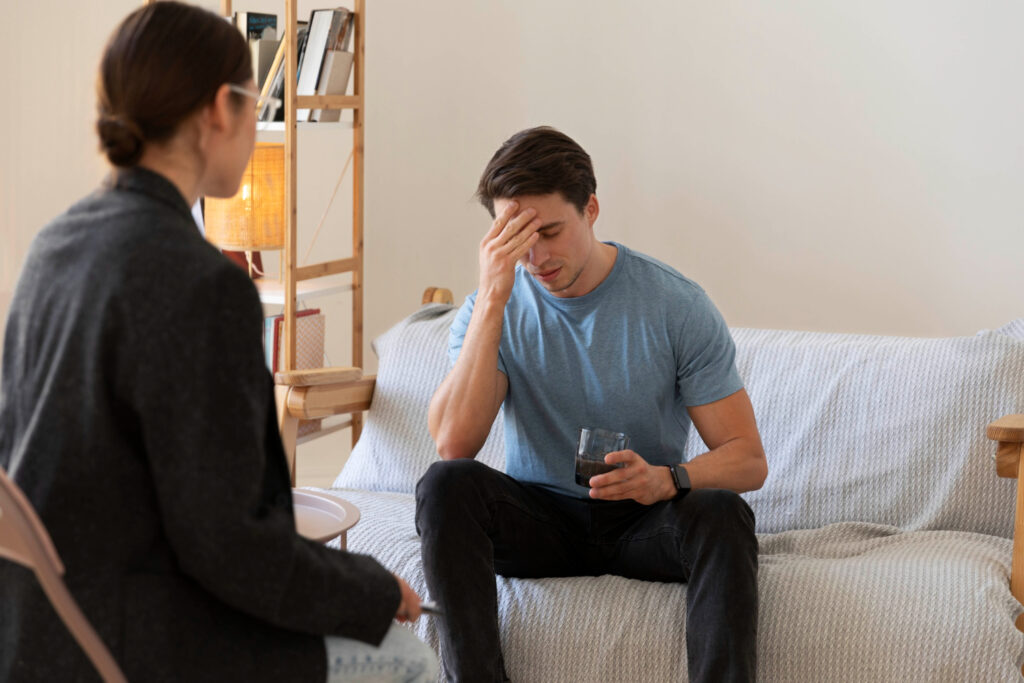
You didn’t think you’d be back here. Not after everything you worked through. The meetings. The late-night cravings you fought off. The mornings you woke up clear-eyed, proud. The first time your partner said, “I’m proud of you.”
But then… it happened. A slip. A binge. A night you can’t explain away. And just like that, the fragile trust you’d been rebuilding cracked.
Maybe your partner packed a bag. Maybe they cried and stayed. Maybe they didn’t even find out—but you know. And the shame? It’s louder than anything.
We need to tell you something: this isn’t the end.
Not of your recovery. Not of your relationship. Not of your story.
At Society Wellness Behavioral Health, we’ve seen what’s possible after relapse—especially when couples get the support they need to move through the pain, not away from it. LGBTQ+ couples counseling isn’t about fixing you. It’s about helping both of you heal, together.
Relapse Hits Differently When You’re in Love
Before, it was just you. Your pain. Your guilt. Your healing.
Now, there’s someone else in the story—and they didn’t sign up for this chapter.
That’s what makes relapse in a relationship so devastating. You’re not just breaking promises to yourself. You’re breaking someone’s heart. Even if they say they understand—even if they stay—it still hurts. And that hurt can swallow everything if you’re not careful.
Couples counseling gives you both a way to speak the unspeakable.
To name the fear. The resentment. The ache of being let down.
To ask: Do we still want this? And what would it take to keep going?
For LGBTQ+ couples, these conversations often carry added weight:
- Fear of judgment from people who already said your relationship wouldn’t last
- Pressure to be a “model” couple in queer spaces
- Trauma histories that amplify mistrust or shame
- Identity safety concerns in traditional therapy settings
You need a space where all of that is allowed to exist. That’s where LGBTQ+ affirming couples therapy becomes more than just “talking.” It becomes sacred ground.
Your Mistake Doesn’t Cancel the Love
Let’s say this again: You relapsed. You didn’t become unlovable.
It’s easy to believe the worst things about yourself in these moments. Especially when your partner is hurt. When they don’t know what to say to you. When you see the way their body stiffens when you walk into a room.
But people who love each other can also wound each other. That’s human. The question is—do both of you want to find your way back?
LGBTQ+ couples counseling makes space for that question to breathe.
It helps your partner voice their anger without it becoming a courtroom. It helps you hold your shame without crumbling under it. And if both of you still want this? It becomes the place where trust gets rebuilt—not through grand gestures, but through the slow work of showing up.
LGBTQ+ Couples Counseling Gives You a New Way to Talk
If you’re like many people in recovery, you’ve gotten good at hiding. Good at saying “I’m fine.” Good at making sure no one knows when you’re slipping.
That armor doesn’t work in a relationship.
And it especially doesn’t work when the person you love can feel you pulling away—again.
Couples counseling gives you tools to:
- Share what’s going on without getting defensive
- Hear your partner’s hurt without shutting down
- Set boundaries that protect both of you
- Rebuild safety, emotionally and physically
- Decide together what’s next (even if that’s space)
This is not about rehashing every mistake. It’s about creating something new—on purpose.
You’re Not at Square One—You’re at a Crossroads
Relapse makes it feel like everything is lost. But it’s not.
You are not square one. You are at a crossroads. And this time, you’re walking in with more honesty.
You know what the triggers were. You know how you felt leading up to it. Maybe for the first time, you’re not trying to explain it away.
That’s growth.
Your partner might not be ready to forgive. They might be scared. But in couples counseling, they get support too—not just to “be there for you,” but to take care of themselves. The relationship doesn’t heal unless both people are seen.
And in our experience? When both people are seen, so much more is possible.
True Story: One Relapse. Two Hearts. One Honest Restart.
We worked with a couple recently—let’s call them Andre and Cam.
Andre had 8 months sober when he relapsed. It was one night. One pill. One old friend he shouldn’t have texted. He told Cam the next day, expecting it to be over.
Cam stayed—but everything changed. They didn’t touch. Didn’t talk. Cam cried in the bathroom so Andre wouldn’t hear. Andre didn’t go to meetings for a week. They were both hurting, in silence.
LGBTQ+ couples counseling was where they started talking again. Cam admitted they were scared—not just of Andre using again, but of becoming “the caretaker.” Andre said he felt like a fraud. Like recovery had been a lie.
Their therapist didn’t take sides. She held space. She asked hard questions gently. And together, they started to write a new chapter.
They’re still together. Not because everything’s fixed—but because they’ve learned how to stay present when things break.
This Is the Part Where You Get to Choose
You’re not obligated to stay in a relationship after relapse. Neither is your partner.
But if both of you still want it? If there’s still love in the room?
Then you deserve help navigating the way back—not just to each other, but to yourselves.
Our LGBTQ+ couples counseling program in Massachusetts offers affirming care for queer, trans, and nonbinary couples navigating substance use, trauma, and relational repair.
It’s not about perfection. It’s about possibility.
Frequently Asked Questions
Can we go to couples counseling if I’m still using?
Yes—absolutely. Counseling can help you create harm-reduction plans, safety boundaries, and communication tools even if you’re not currently sober. Some couples start therapy mid-relapse and still make progress.
What if my partner doesn’t want to go?
That’s okay. Many people begin with individual therapy. Sometimes, just one person starting counseling shifts the dynamic enough for the other to become open over time. Your willingness matters—even if they’re not ready yet.
Will the therapist take sides?
No. A trained LGBTQ+ couples therapist will hold space for both people. Their role is not to assign blame but to help you communicate, understand, and decide what’s right for your relationship—together.
We’re a queer/trans couple—will we be safe and understood?
Yes. Our clinicians are trained in LGBTQ+ affirming care. We understand the layered realities of identity, community pressure, and past trauma. You will be met with respect and nuance.
What if we decide not to stay together?
That’s a valid outcome. Couples counseling isn’t just about staying—it’s about clarity. If the relationship ends, it can end with mutual respect, understanding, and care.
This Isn’t the End. It’s a Rewrite.
You get to keep going. You get to choose connection again. You get to believe in love that’s messy, real, and still standing.
Relapse might’ve knocked the wind out of you—but your lungs still work.
Take a breath. Then take the next step.
Ready to reconnect with yourself and your partner?
Call (888) 964-8116 to learn more about our LGBTQ+ couples counseling services in Boston, MA.