

I sat there staring at my phone for 45 minutes.
Not scrolling. Not texting anyone else. Just hovering over the same message I’d already typed and deleted five times.
“Hey—I slipped. I don’t know what to do next.”
Every time I got that far, I erased it. My thumb would hover, then retreat. I’d toss my phone across the bed like it was hot to the touch.
I wasn’t afraid of relapse. I was afraid of being seen.
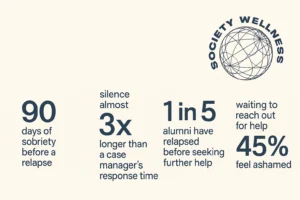
Ninety days sober. I’d made it through the holidays. I’d spoken in group. I’d reconnected with my family. I’d made promises. And then… I drank.
This blog isn’t about the spiral. It’s about the moment right after the fall—when you’re still close enough to catch yourself, but the shame is trying to convince you to disappear. It’s about the text I was terrified to send—and what happened when I did.
The Lie I Believed: “I Can’t Go Back There After This”
If you’ve ever relapsed after a stretch of sobriety, you might recognize this voice:
- “You had your chance.”
- “You were doing so well.”
- “They’re going to be so disappointed.”
- “You don’t belong there anymore.”
That voice got louder every day after I slipped. I kept waiting for the “right” time to reach out again, as if there would ever be a day when I didn’t feel like garbage about what I’d done.
But here’s what I learned the hard way: the longer you wait, the heavier the silence gets.
And it was silence—not alcohol—that almost took me out.
I Didn’t Spiral. I Just Started Slipping Quietly
This wasn’t a dramatic bender.
It was one drink at a work event. Then two more the next night to “take the edge off.” Then a bottle I kept hidden. I told myself it didn’t count because I didn’t get wasted. I still made it to work. No one knew.
But I knew.
I knew because I stopped sleeping. Because I ignored my sponsor’s calls. Because the guilt showed up in the mirror before the hangover ever did.
I told myself I wasn’t in a relapse. I was just “resetting.” But deep down, I was stalling. Waiting to either crash harder or somehow magically fix it myself before anyone found out.
Neither happened.
The Text That Changed Everything
It was 7:42am on a Tuesday.
I hadn’t slept. My stomach hurt from shame and sugar and whatever I’d tried to call dinner the night before. And I just… couldn’t do it anymore.
So I typed the message to my old case manager at Society Wellness Behavioral Health:
“Hey. I slipped. I’m scared. Can we talk?”
No punctuation. No explanation. Just a tiny white flag.
Her reply came 12 minutes later:
“Absolutely. Thanks for reaching out. We’re here for you.”
I burst into tears.
Not because I was judged—but because I wasn’t.
Coming Back Felt Different—In a Good Way
I expected to walk in and feel like a failure.
But walking back into alcohol addiction treatment didn’t feel like going backward. It felt like remembering something I already knew: I wasn’t supposed to do this alone.
Here’s what helped the most:
- I wasn’t treated like a beginner. They honored the work I’d done—and the courage it took to come back.
- My relapse wasn’t the headline. It was part of the conversation, not my entire identity.
- We built a different plan. Not more intense. Just more honest. Tailored to the parts I hadn’t fully looked at the first time.
- I was allowed to be ashamed—without being shamed.
That distinction changed everything.
I Wasn’t the Only One—Not by a Long Shot
One of the first groups I attended after returning was for alumni navigating relapse.
There were six of us. Different ages. Different backgrounds. Same look in our eyes: regret, relief, and a fragile kind of hope.
What we shared:
- “I thought I’d be kicked out of the recovery community.”
- “I kept it a secret for weeks.”
- “I felt like I had to earn my way back.”
- “I was scared of what people would think.”
But what we got back?
- “We’re glad you’re here.”
- “You didn’t lose your seat. You just stepped away.”
- “Let’s talk about what didn’t work—and what still can.”
Turns out relapse doesn’t revoke your membership. It just makes the invitation even more important.
If You’re Hiding Right Now, I Want You to Know This
You’re not weak. You’re not broken. You’re not disqualified.
You’re someone who’s hurting and trying to figure out what’s next.
If I could sit next to you on the edge of your bed right now, phone in hand, heart in your throat, here’s what I’d say:
- The shame is lying to you.
- The people who helped you the first time still want to help.
- You are not the only one.
- You’re allowed to come back before things get worse.
- And yes—that message you’re terrified to send? It could save your life.
What I Know Now
Slipping doesn’t erase what I built. It revealed the parts I still need to strengthen.
I know now that relapse isn’t the opposite of recovery. It’s a crossroads inside it.
I know that healing isn’t a straight line—it’s a conversation. One you have to keep coming back to.
And I know that every time I choose connection over shame, I win.
FAQs for Alumni Who Slipped
Do I have to start from scratch if I return to treatment?
No. At Society Wellness, we recognize the progress you’ve already made. Your treatment plan will be adjusted based on what’s needed now—not reset to zero.
Will I be judged for relapsing?
No. Relapse is part of many people’s recovery journey. We respond with compassion and clinical insight, not shame.
Is outpatient treatment enough after a relapse?
Often, yes. Our outpatient and IOP programs are designed to support relapse recovery without requiring full residential stays—unless clinically necessary.
What if I’m too embarrassed to reach out?
That’s common—and valid. You can start small. A text. An email. A call with just a few words: “I slipped. Can we talk?” You will be met with care, not criticism.
What makes Society Wellness different?
We treat relapse as an opportunity to reconnect, not as a failure. We offer LGBTQ-affirming, trauma-informed support that focuses on sustainability, not punishment.
Your Seat at the Table Is Still Here
You haven’t lost your chance. You haven’t failed too many times. You don’t have to figure it out alone.
The door is still open. The people who cared before still care now.
And that terrifying text? It might just be the bravest thing you’ll ever send.
Ready to send your message? We’re ready to respond.
Call (888) 964-8116 or visit Society Wellness Behavioral Health’s Alcohol Addiction Treatment in Needham, Massachusetts. No shame. No starting over. Just a next step—together.